


VoIP stands for Voice over Internet Protocol. In simple terms, it means making and receiving phone calls over an internet connection instead of using a traditional analogue phone line.
For UK businesses, VoIP is becoming the standard replacement for traditional landlines as the old PSTN network is phased out. With a VoIP phone system, your team can make calls using desk phones, mobiles, desktop apps or headsets, while keeping business features such as call routing, voicemail-to-email, call recording and number porting.
In this guide, we explain what VoIP is, how VoIP phones work, what equipment you need, the pros and cons, typical UK costs, and how to decide whether it is right for your business.
What is VoIP in simple terms?
VoIP is a phone service that uses your internet connection to make and receive calls instead of a traditional landline. Your voice is converted into digital data, sent over the internet, and then converted back into audio for the person receiving the call.
VoIP basics: what does a business need?
A business VoIP setup usually needs:
- A reliable broadband or leased line connection
- A VoIP phone system or hosted VoIP provider
- Desk phones, mobile apps, desktop apps or headsets
- Business phone numbers
- Call routing rules, voicemail and user licences
- Optional extras such as call recording, analytics or 4G/5G backup
For most small businesses, VoIP does not require complex on-site phone equipment. A hosted VoIP system is managed in the cloud, meaning users can make and receive calls from different locations while still presenting the business number.
What is a VoIP phone?
A VoIP phone is a phone that connects to an internet-based phone system rather than a traditional phone socket. It can look like a normal desk phone, but instead of using an analogue line, it connects through your network using Ethernet or WiFi.
You do not always need a physical VoIP phone. Many businesses use a mobile app, desktop app or headset instead, allowing staff to make and receive calls from a laptop or smartphone.
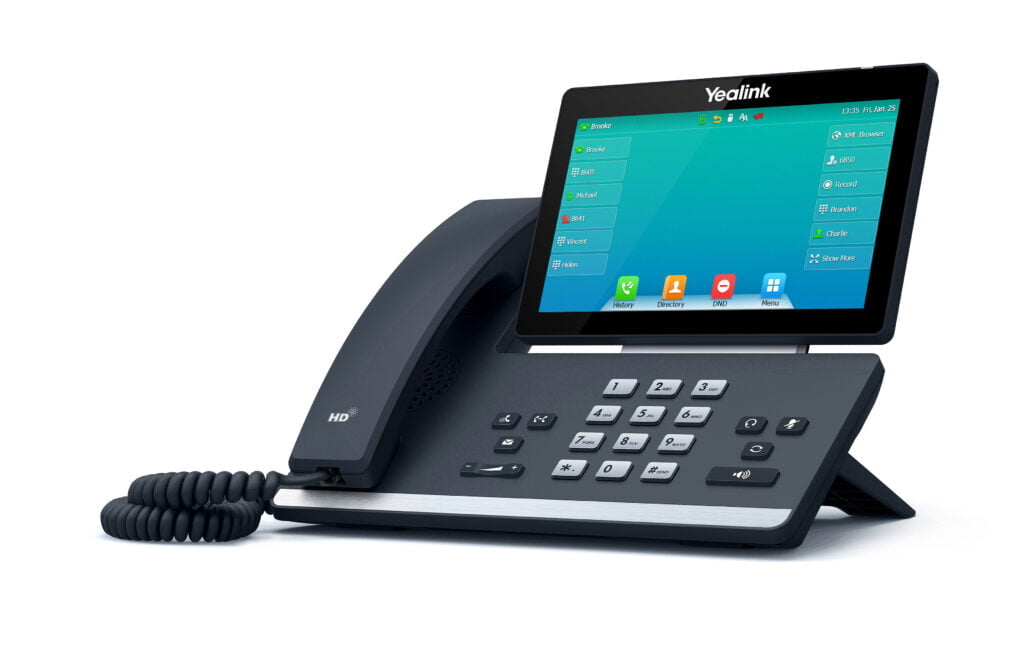
How does VoIP work?
Simply explained, VoIP refers to making calls that are made over the internet rather than over an analogue line, commonly referred to as landline or PSTN. When you speak into a VoIP phone or app, your voice is converted into small packets of digital data. These packets travel over your internet connection to your VoIP provider, then on to the person you are calling. The process happens almost instantly, so the call feels like a normal phone call.

This is why broadband quality matters. If your internet connection is unstable, your call quality can suffer. For businesses that rely heavily on phones, it is worth considering FTTP, a leased line, QoS settings, or 4G/5G backup.
Why are UK businesses moving to VoIP?
The UK’s old analogue phone network, known as the PSTN, is being retired. The current UK timeline states that Openreach PSTN users need to be migrated to new services by 31 January 2027.
This means businesses still using traditional landlines, older analogue phone systems, fax lines, alarm lines or lift lines should review what they have and plan their migration before the deadline.
Globe2 can help you review your existing phone lines, check what services need replacing, and move your business to a supported VoIP phone system.
What does a VoIP provider do?
A VoIP provider supplies and manages the phone service that allows your business to make and receive calls over the internet. Depending on the provider, this can include user licences, phone numbers, call routing, number porting, desk phones, mobile apps, call recording, support and ongoing management.
For businesses, choosing a provider is not just about the monthly licence cost. You should also consider support, number porting experience, call quality, reliability, setup help, and whether the provider can also support your broadband connection.
Is VoIP good for small businesses?
Yes, VoIP is often a good fit for small businesses because it is flexible, scalable and usually easier to manage than an older landline-based phone system. You can start with a small number of users and add more as your business grows.
Common small business VoIP features include:
- Business number on mobile
- Voicemail-to-email
- Call forwarding
- Ring groups
- Auto-attendant menus
- Call recording
- Desk phone and softphone options
- Remote working support
How much does VoIP cost in the UK?
Business VoIP pricing in the UK usually depends on the number of users, included minutes, call recording, hardware, setup requirements and whether you need extras such as mobile apps or call analytics.
As a guide, many hosted VoIP systems are priced per user per month. Globe2 can provide a tailored quote based on the number of users, call requirements, handsets and any number porting needed.
FAQs:
What does VoIP stand for?
VoIP stands for Voice over Internet Protocol. It means making phone calls over an internet connection instead of a traditional phone line.
What is a VoIP phone service?
A VoIP phone service is a telephone service delivered over the internet. It allows users to make and receive calls using desk phones, mobile apps, desktop apps or headsets.
Is VoIP the same as internet calling?
VoIP is a form of internet calling, but business VoIP usually includes extra features such as phone numbers, call routing, voicemail, call recording, user management and number porting.
Do I need a VoIP phone or can I use an app?
You can use either. Some businesses prefer physical desk phones, while others use mobile or desktop apps. Many businesses use a mixture of both.
What internet speed do I need for VoIP?
VoIP does not usually need a huge amount of bandwidth per call, but it does need a stable, low-latency connection. For business use, reliability is more important than headline speed.
Can I keep my business phone number with VoIP?
Yes, in most cases you can port your existing business number to a VoIP provider. The process normally requires details of your current provider, the number being moved and confirmation of ownership.
What happens to VoIP if the internet goes down?
If your internet connection goes down, desk phones connected to that connection may stop working. However, calls can often be diverted to mobiles, used through mobile apps, or protected with a backup connection such as 4G or 5G.